Ropes
Height, slack, and clear calls
Rope walls add vertical room. Whether you are tying in for top rope or clipping a lead, the partnership on the ground matters as much as the moves above.
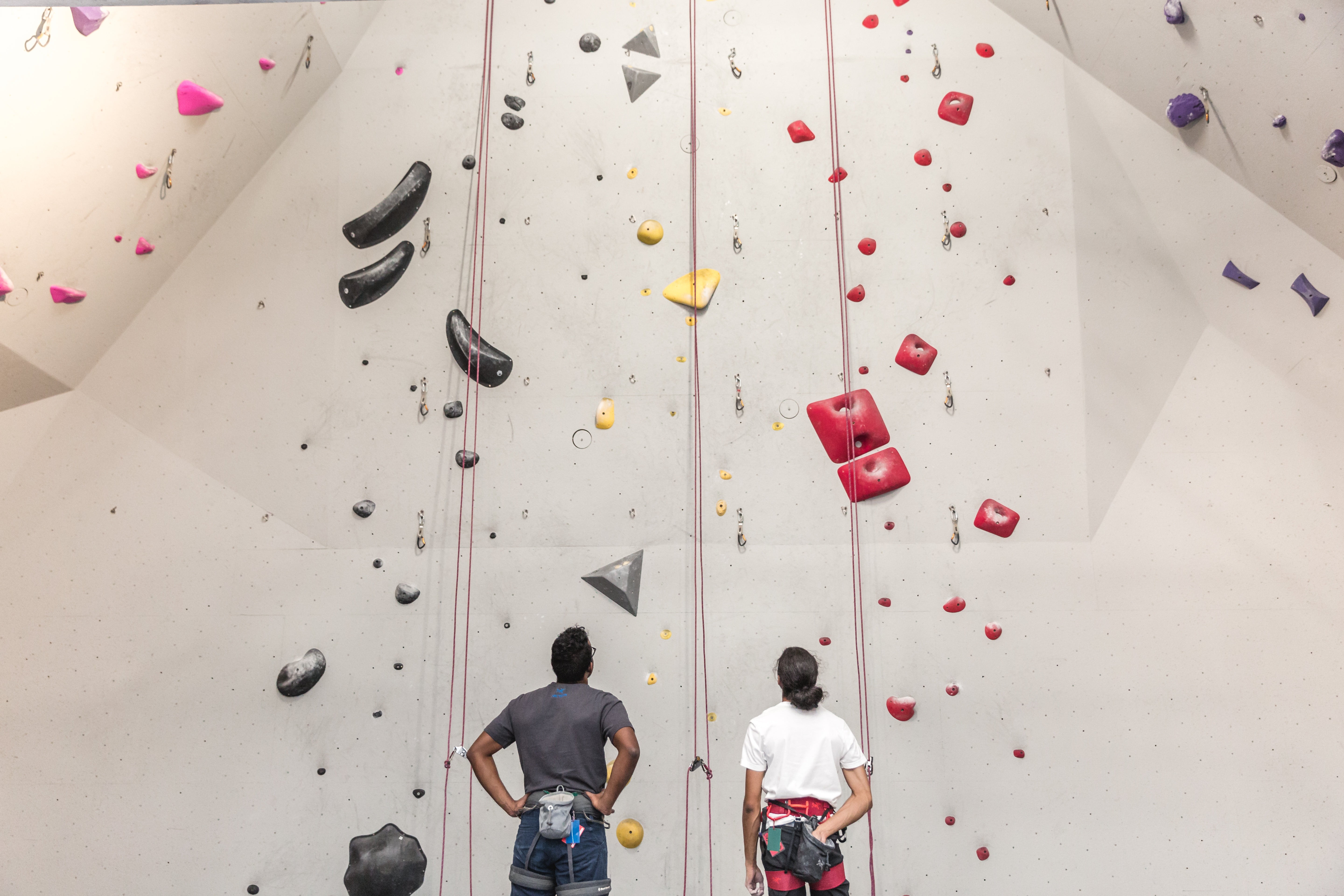
Top-rope rhythm
The rope runs through fixed anchors. You focus on footwork and rests while your partner manages slack from the floor.
- Check the knot — Both climber and belayer verify tie-ins before leaving the ground.
- Signals — Agree on words for climb, slack, take, and lower before the first hold.
- Stance — Belayers align with the first bolt or anchor line to avoid zig-zag rope paths.
Lead climbing overview
You carry the rope and clip quickdraws as you climb. It asks for route reading, calm clipping, and a belayer who feeds slack at the right moments.
Every gym sets its own checks and progression paths — these habits transfer wherever you clip in.
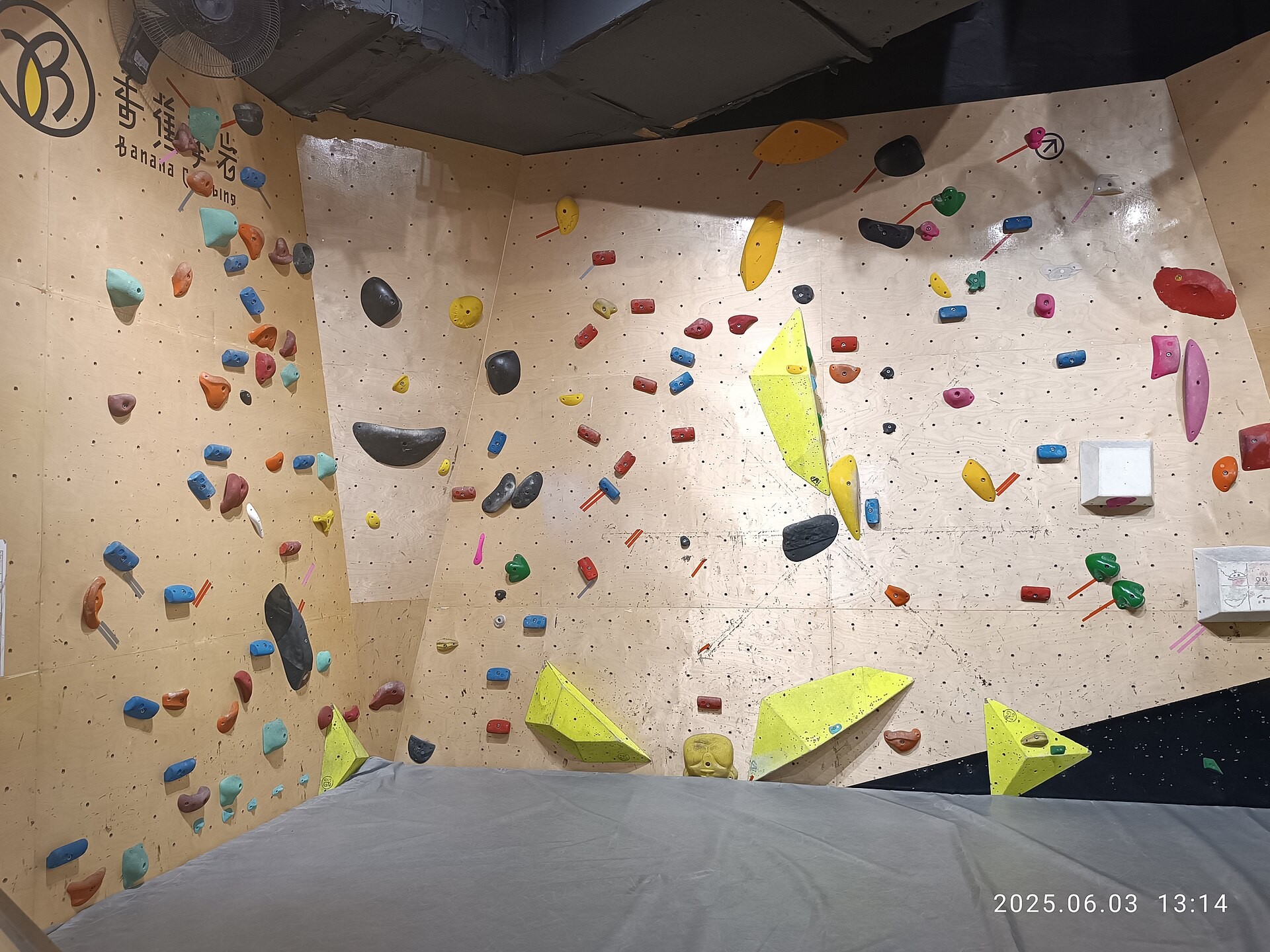
Zones on the tall wall
- Vertical tech — Small edges and thoughtful feet on sustained pitches.
- Cave — Steeper rock requiring lock-offs and kneebars between clips.
- Arete — Outside corners where hips square and flags buy reach.